
Powered By



 Continue with Facebook
Continue with Email
Continue with Facebook
Continue with Email
Pulmonary hypertension (PH) means the blood vessels between the heart and lungs become narrow. This narrowing raises blood pressure in the lung arteries. Along with chest pain, heart palpitations, and fatigue, difficulty breathing is a common symptom of PH.
It’s important to note that PH is different from systemic hypertension (regular high blood pressure). Systemic hypertension affects the arteries that carry blood from the heart to the rest of the body.
If you have shortness of breath with PH, here’s what you need to know about why it happens and how to work with your healthcare provider to help manage it.
Shortness of breath with PH can range from moderate to severe. Some people have trouble breathing only in certain situations. One myPHteam member shared, “I get short of breath when bending over to pick something up.”
Another said, “It’s really hard to take a deep breath or walk very far outside in the cold air.”
Other people with PH have shortness of breath more often. One member described it as “shortness of breath with slight movement.” They added, “Sometimes, it goes away in a few minutes, but it usually lasts for several hours. Sometimes, I even wake up with it.”

Another member shared that they struggle with shortness of breath at home as well. “I get short of breath when I exert my energy to do chores or anything,” they said.
Even when you know the cause, shortness of breath can be scary. As one member said, “Sometimes, it is terrifying, because it feels like I am suffocating.”
PH happens when the pulmonary arteries — the blood vessels between the heart and lungs — become stiff and narrow. This narrowing causes high blood pressure and poor blood flow. But how does this lead to shortness of breath?
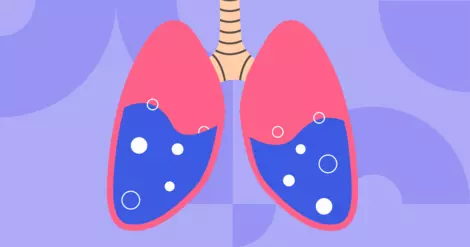
In people with PH, shortness of breath can happen when blood doesn’t flow evenly through the lungs. Even if blood still passes through, it may not reach all areas where oxygen is picked up. Imagine pouring water into one corner of a sponge — that spot gets wet, but the rest stays dry. Similarly, if blood doesn’t reach all parts of the lungs, less oxygen gets into the blood, which can make you feel out of breath even if you’re breathing in plenty of air.
Over time, PH can weaken the right side of the heart, which pumps blood through the pulmonary arteries. This makes blood flow and oxygen exchange even harder.
At first, shortness of breath may only happen during physical activity or when bending over. In severe cases, you may feel short of breath when you’re resting.
Shortness of breath is often the first symptom of PH, but more symptoms can develop as the lung disease progresses or gets worse. Other symptoms of PH include:
People with PH may also experience general weakness or muscle weakness. One myPHteam member asked, “Does anyone else struggle with balance from leg weakness?”
“Yes, balance, light-headedness, and leg weakness were the first symptoms that I felt,” another member replied. “I have to take a big breath before standing up.”
If you experience sudden weakness or can’t move your arms or legs, call your local emergency number or go to the emergency room immediately.
Breathing problems can also make it hard for you to sleep if you have PH. Some people with PH also have obstructive sleep apnea, which means breathing repeatedly stops and starts during sleep and can lower oxygen levels. Shortness of breath and fatigue may go hand in hand. “I didn’t sleep last night, and then I tried to sleep today,” wrote one member. “I had problems breathing, but at least I got a couple of hours.”
Conditions such as chronic obstructive pulmonary disease (COPD) — including chronic bronchitis and emphysema — and interstitial lung disease can also cause PH and breathing difficulties.
Several treatments can help manage PH and ease symptoms like shortness of breath. Talk to your healthcare provider to find the best options for you.
Certain medications can help PH symptoms, including:
For people with pulmonary arterial hypertension (PAH), a type of PH, healthcare providers may recommend combination therapy. This treatment involves using two or more medications that work differently to improve blood flow, reduce strain on the heart, and slow disease progression.
Combination therapy may include the following:
Studies suggest that starting with combination therapy may slow PAH from getting worse and help you breathe easier and be more active. Your healthcare provider can choose the best combination of medicines based on your symptoms and how you respond to treatment.
Many people with PH and low levels of blood oxygen find that getting extra oxygen helps ease shortness of breath. Some people use oxygen therapy all the time, while others use it as needed.
One myPHteam member shared, “When I’m walking with oxygen, and it gets harder to breathe, I stop and rest for a minute to get my oxygen saturation rates up again. Then I am good to go another 25 to 35 feet before I have to stop again.”
Other devices, like continuous positive airway pressure (CPAP) machines, can help people with PH and sleep apnea breathe better at night. One member said, “I use a CPAP at night but no oxygen, as my rate only falls to about 80 upon exertion.”
If you’re eligible and your doctor thinks it would be helpful, pulmonary rehabilitation can teach you ways to manage your shortness of breath. “When I went through pulmonary rehab, they taught us different ways to breathe,” shared a member of myPHteam.
Another said, “When I have trouble breathing, I sit and do pulse breathing. I breathe in and breathe out until my oxygen level goes up to at least 90, and then I do my work again.”
Pulmonary rehabilitation may also include light physical activity. One member noted, “I don’t exercise very fast because I get so out of breath, but rehab has helped. Even a little bit makes a difference.”
Many doctors recommend lifestyle changes to help manage PH and its symptoms. These lifestyle changes include reducing common risk factors, such as:
If you need help making these changes, talk with your healthcare provider. They can suggest a healthy lifestyle plan to complement your treatment and help manage shortness of breath and other symptoms of PH.
On myPHteam, people share their experiences with pulmonary hypertension, get advice, and find support from others who understand.
Have you experienced shortness of breath with PH? What strategies have you tried to manage it? Let others know in the comments below.
Get updates directly to your inbox.


Would Nebulizer treatments be beneficial?

 Continue with Facebook
Continue with Email
Continue with Facebook
Continue with Email
Continue with Facebook
Continue with Email
Continue with Facebook
Continue with Email
Become a member to get even more





 Join
Join

 Your Privacy Choices

This is a member-feature!
Sign up for free to view article comments.
I love these articles that reminds me that I'm not alone, and I'm learning to navigate the. process.
We'd love to hear from you! Please share your name and email to post and read comments.
You'll also get the latest articles directly to your inbox.